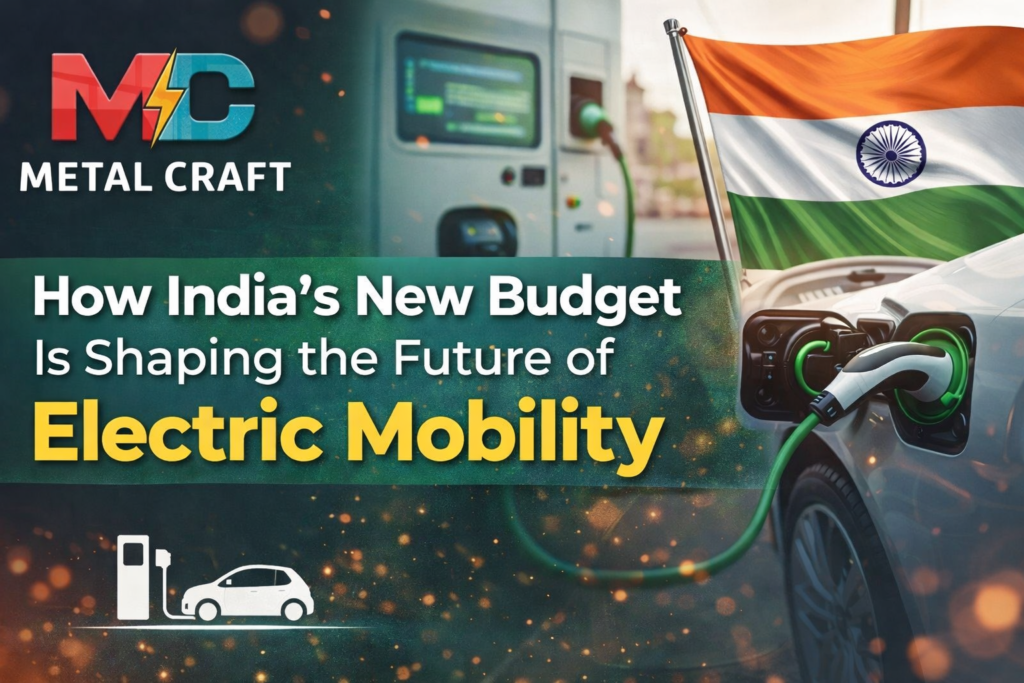
India’s transition to electric vehicles (EVs) isn’t just a buzzword — it’s quickly becoming the backbone of the country’s transport and clean-energy strategy. The Union Budget 2026 has continued this momentum by putting renewed emphasis on electric mobility, domestic manufacturing, charging infrastructure, and strategic supply chains. As a result, the EV ecosystem — from electric scooters to cars and buses — is set to benefit from smarter policies and incentives that make EV ownership more attractive and sustainable.
Balancing Subsidies & Long-Term Growth
While earlier programs like the FAME (Faster Adoption and Manufacturing of Electric Vehicles) scheme helped accelerate adoption through direct subsidies, the 2026 Budget has adopted a more calibrated approach by extending and refining incentives that support sustained growth instead of short-term boosts alone. One of the clearest examples is the PM E-Drive scheme, which continues to support electric mobility with a significant financial outlay, and customs duty exemptions on essential EV battery inputs — critical for reducing production costs.
This reflects a shift toward supporting the full EV value chain — from cell manufacturing to final vehicle assembly — rather than simply subsidizing purchases. It signals that the government wants to make EVs affordable, yet competitive in the long run.
Boosting Domestic Manufacturing and Supply Chains
One of the biggest challenges for EV adoption in India has been import dependence on critical components like lithium-ion battery cells, rare earth magnet materials, and semiconductor chips. The 2026 budget addresses this through significant allocations to bolster domestic industrial capacity and supply chains, including incentives for battery and electronics manufacturing and investment in industrial infrastructure.
This push toward “Make in India” for EVs will help reduce costs and make India a more attractive hub for EV production.
State-level flexibility introduced in the budget will also allow regional governments to tailor EV infrastructure investments based on local needs — from more public chargers in smaller cities to transit electrification in major urban centers.
Charging Infrastructure and Ecosystem Development
A strong EV ecosystem depends on widespread infrastructure. Budget allocations across capital projects and state-led initiatives are helping expand charging station networks, especially in Tier-2 and Tier-3 cities where range anxiety has been a barrier to adoption. Some industry experts are also calling for more rational tax policies, such as uniform GST across EVs and related services, which could bring down overall EV costs and encourage broader adoption.
Impact on Two-Wheelers and Public Transport
IIndia’s EV revolution is perhaps most visible in two-wheelers — the largest segment of EV sales — and buses. Government electrification plans and incentives for electric buses are making public transport greener and more affordable. With personal EV adoption rising, supported by policies around battery cost reduction and possible future tax reforms, two-wheelers are expected to continue dominating the transition.
Looking Ahead: Sustainable Mobility With Broader Benefits
The Budget 2026 framework signals a maturing EV vision: one that integrates economic growth, climate goals, and consumer affordability. Better domestic manufacturing, strategic incentives, infrastructure expansion, and state-level execution are set to unlock long-term opportunities for EV companies — from startups and OEMs to component suppliers and service networks.
By focusing on sustainable EV economics rather than short-term buyer subsidies, India could not only accelerate adoption but also create new job markets and reduce dependence on fossil fuels and imports. The result — cleaner cities, smarter transport, and a stronger economy poised for global EV leadership.
Leave a Reply