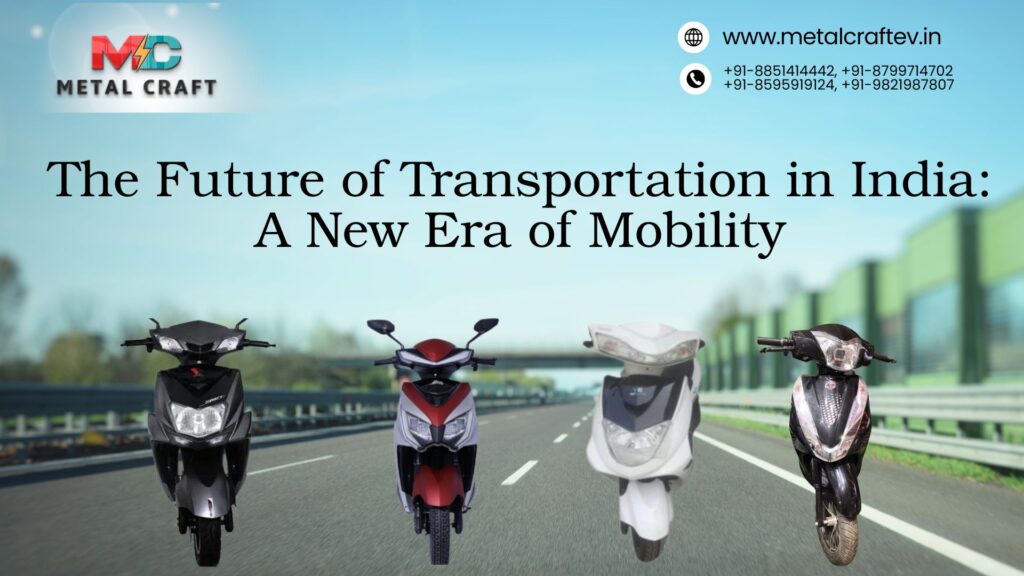
India is witnessing a major transformation in its transportation sector. Rapid urbanization, rising fuel costs, environmental concerns, and government initiatives are reshaping how people move. The future of transportation in India is shifting towards cleaner, smarter, and more sustainable solutions that balance growth with responsibility.
Rise of Electric Mobility
Electric vehicles (EVs) are at the heart of India’s future transportation vision. With increasing awareness about pollution and climate change, EVs offer an eco-friendly alternative to traditional petrol and diesel vehicles. Electric scooters, bikes, cars, and buses are becoming popular due to low running costs, reduced emissions, and government subsidies under schemes like FAME India. Improved battery technology and expanding charging infrastructure are further accelerating EV adoption.
Smart and Connected Transport Systems
Technology is playing a crucial role in shaping future mobility. Smart traffic management systems, GPS-enabled public transport, real-time tracking apps, and digital payment solutions are making transportation more efficient and user-friendly. Intelligent Transport Systems (ITS) help reduce congestion, improve road safety, and optimize fuel consumption, especially in metropolitan cities.
Growth of Public Transportation
India is investing heavily in modern public transport systems such as metro rail, electric buses, and rapid transit corridors. Cities like Delhi, Mumbai, Bengaluru, and Ahmedabad are expanding metro networks to reduce traffic congestion India is investing heavily in modern public transport systems such as metro rail, electric buses, and rapid transit corridors. Cities like Delhi, Mumbai, Bengaluru, and Ahmedabad are expanding metro networks to reduce traffic congestion and carbon emissions. Electric buses and shared mobility solutions are also being promoted to provide affordable and sustainable travel options.
Focus on Sustainable and Green Mobility
Sustainability is a key driver of future transportation. The government is encouraging the use of renewable energy, alternative fuels, and eco-friendly materials. Initiatives like vehicle scrappage policies aim to phase out old, polluting vehicles. Cycling tracks, pedestrian-friendly roads, and last-mile connectivity solutions are gaining importance in urban planning.
Innovation and Make in India
India’s transportation future is also being shaped by innovation and local manufacturing. Startups and manufacturers are developing advanced EV technology, battery solutions, and mobility platforms under the “Make in India” initiative. This not only boosts economic growth but also reduces dependence on imports.
Conclusion
The future of transportation in India is dynamic, technology-driven, and sustainable. With electric mobility, smart infrastructure, and supportive government policies, India is moving towards a cleaner and more efficient transport ecosystem. As innovation continues, transportation in India will not just be about movement—but about smarter living and a greener future.
Leave a Reply